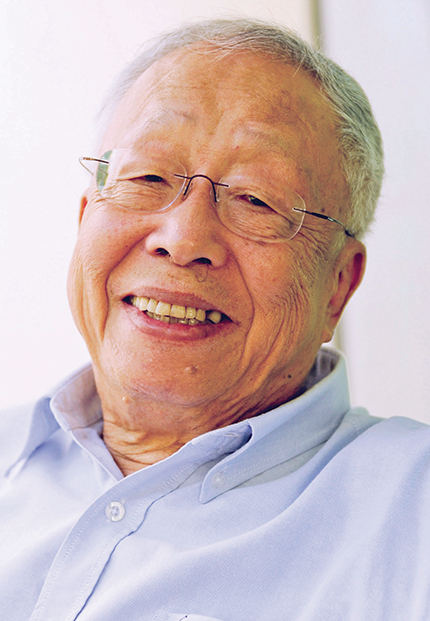
Kerson Huang
DOI: 10.1063/PT.3.3702
Kerson Huang, a professor emeritus at MIT who was best known for his contributions to statistical physics, died of cancer on 1 September 2016 in Danvers, Massachusetts.

Kerson Huang
NANYANG TECHNOLOGICAL UNIVERSITY
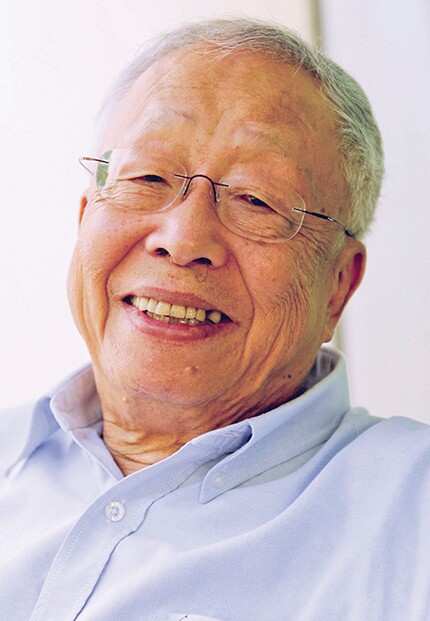
Huang was born on 15 March 1928 in Nanning, Guangxi Province, China. After the Japanese invaded in 1937, he and his family moved to Manila, the Philippines. Following the end of World War II, he went to the US, where he obtained his BS in 1950 and his PhD in 1953, both in physics and both from MIT. His earliest research was on the zitterbewegung (“trembling motion”) of the Dirac electron. Victor Weisskopf was his thesis adviser, but Huang worked more closely with Sidney Drell on meson field theory. He learned the pseudopotential method from Weisskopf and applied it to the study of the quantum mechanical problem of hard spheres.
In the fall of 1955, Huang went to the Institute for Advanced Study in Princeton, New Jersey, for his postdoc and introduced to Chen Ning Yang the pseudopotential method. Together with Tsung-Dao Lee, they collaborated on the problem of dilute hard-sphere bosons and demonstrated the superfluidity of dilute Bose gases due to Bose–Einstein condensation. Huang presented that work at the institute to an audience that included Eugene Wigner, Freeman Dyson, J. Robert Oppenheimer, and Wolfgang Pauli. Pauli slept during the seminar and only woke up to comment that he did not like the pseudopotential because it is not Hermitian. However, he said later that Huang’s work was nicht dumm (“not dumb”). Fifty years later the work was confirmed by experiments on Bose– Einstein condensation in alkali gases.
Huang returned to MIT in 1957 as an assistant professor and continued his studies in both many-body problems and particle physics. Ranging from high-energy to low-temperature physics, his research covered numerous topics, including pion decay, muon capture, high-energy scattering, bootstrap solutions, and imperfect Fermi and Bose gases. MIT mathematician John Nash frequently engaged Huang in discussions about the fundamentals and philosophy of quantum mechanics.
In the 1960s and 1970s, Huang worked on the dual resonance model. During a weekend vacation at his log cabin in New Hampshire in 1970 with colleague Steven Weinberg, Huang mentioned the concept of ultimate temperature, above which adding energy to a system only produces particles instead of raising the system’s temperature. Weinberg immediately realized its importance in the early universe. They spent the weekend doing calculations, and soon after they published an influential article on the subject.
Huang made many substantial contributions during the development of the standard model in particle physics. By considering the possibility of asymptotic freedom in scalar field theories, he challenged the common perception that only non-abelian gauge theories are asymptotically free. He and his student Kenneth Halpern showed that some scalar theories could become asymptotically free provided that what’s now known as the Halpern–Huang potential is used to describe the interaction.
Huang also devoted great effort to physics education. He wrote eight physics books, including Statistical Mechanics (Wiley, 1963; 2nd edition, 1987), Introduction to Statistical Physics (Taylor & Francis, 2001), and Quantum Field Theory: From Operators to Path Integrals (Wiley, 1998; 2nd edition, 2010), which continue to be widely used as textbooks and references.
Huang became a professor emeritus in 1999 and remained with the Center for Theoretical Physics at MIT until 2005. He then became a visiting professor at Tsinghua University in China and at Nanyang Technological University in Singapore. His interests shifted to biophysics and quantum cosmology. Huang proposed a conditioned self-avoiding walk model and wrote a MATLAB program to study the problem of protein folding. In quantum cosmology, he proposed a superfluid-universe scenario for inflation, matter creation, dark matter, and dark energy. He also suggested using a vortex boundary layer, now known as the Kerson layer, to solve the matching problem in the gravitational collapse of rotating black holes. Of his more than 100 research articles, about one-fifth were written in his last decade.
Besides his physics accomplishments, Huang was famous for his translations, in particular The Rubaiyat of Omar Khayyam: A Rendition in Classical Chinese Quatrains and I Ching, the Oracle. He also wrote many English and Chinese poems and published several books of original poetry; people in the poetry community referred to Huang as “a poet [who] also did physics research.”
More about the authors
Chi Xiong, Nanyang Technological University, Singapore.