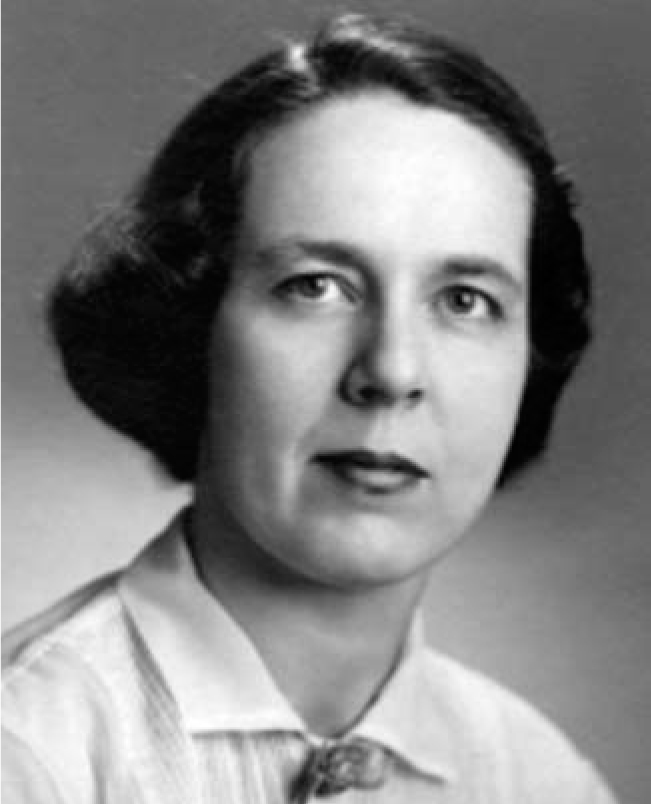
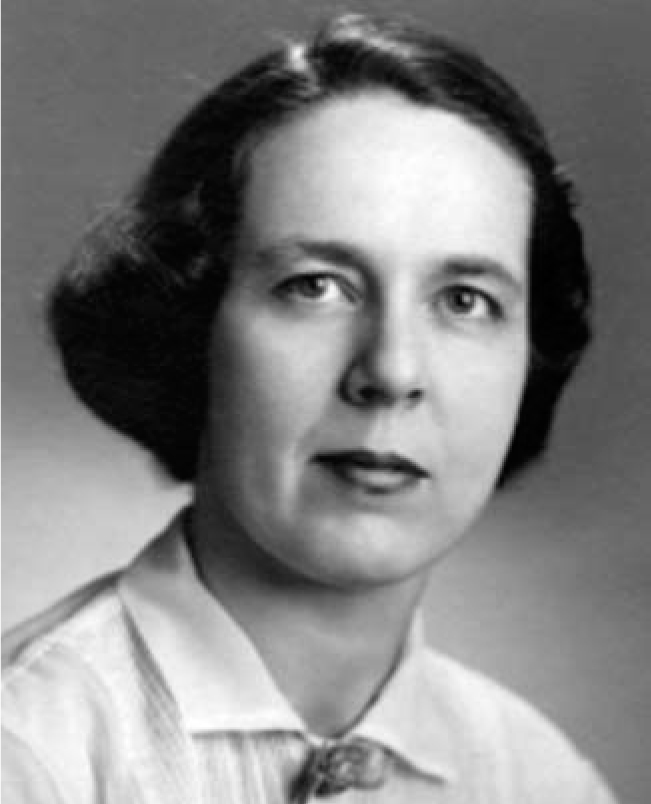
Katherine Austin Lathrop
DOI: 10.1063/1.2155770
Katherine Austin Lathrop, pioneer research scientist in nuclear medicine and professor emeritus in the department of radiology at the University of Chicago, died of complications of advanced dementia in Las Cruces, New Mexico, on 10 March 2005.
Born in Lawton, Oklahoma, on 16 June 1915, Katherine was drawn at an early age to the sciences. Initially, she majored in home economics, which introduced her to textile chemistry and to weaving, one of her many lifelong interests. An exceptional scholar, Katherine earned BS degrees in biology (1936) and physics (1939) and an MS in chemistry (1939) from Oklahoma State University. Katherine married Clarence Lathrop in 1938; they moved to Chicago with two children in 1944.
To help cover expenses, Katherine took a position in 1945 as a junior chemist at the metallurgical laboratory of the Manhattan Project on the University of Chicago (U of C) campus. There she carried out quantitative studies of the dose distribution of radiation absorbed from radioactive materials (primarily radium and fission products) administered to laboratory animals. From 1947 to 1954, Katherine was an associate biochemist at Argonne National Laboratory (ANL) in Lemont, Illinois, and a chemist at the U of C.
After her fifth child was born in 1952, Katherine found the commute to ANL burdensome, and in 1954 she joined the research team of surgeon Paul V. Harper at the Argonne Cancer Research Hospital on the U of C campus. Part of the Atoms for Peace program of the US Atomic Energy Commission, ACRH opened in 1953 with the mission of exploring uses of radioactive materials and radiation beams in the diagnosis and treatment of cancer. Katherine’s broad background in the sciences enabled her to make major contributions to this mission during the subsequent 40 years of her close working relationship with Harper.
Together, Katherine and Harper developed intraoperative radiation therapy procedures including iodine-131 “afterloaded” to fine polyethylene tubing threaded through cancerous pancreas tissue; yttrium-90 pellets implanted in the pituitary gland using a transsphenoidal approach; and stron-tium-90 delivered on the tip of a long, removable needle, also using the transsphenoidal approach. For all such procedures, Katherine performed meticulous measurements and calculations to determine the absorbed radiation dose distribution. As a possible alternative to 131I in some applications, Katherine and Harper developed a method for producing 125I by freezing xenon-124 in a zirconium capsule and then irradiating it in the reactor at ANL. Now widely used in countless radioimmunoassay procedures, 125I is currently produced commercially by essentially the same method.
On the basis of her contributions to quantitative radiation dosimetry, Katherine became chair of the medical radiation dose committee of the Society of Nuclear Medicine, a member of the American National Standards Institute Committee N44.3 on Nuclear Medicine, and a member of the advisory panel on radioactive pharmaceuticals for the United States Pharmacopoeia.
While therapy with radioisotopes remained an important part of its research, the ACRH nuclear medicine team is best known for the clinical introduction of metastable technetium-99 for detecting brain tumors and for a great variety of other diagnostic imaging applications. Annually, 99mTc is used in approximately 35 million such procedures worldwide.
Katherine always found time to discuss research issues with students and trainees, and in the graduate program of medical physics she gave lucid and well-received lectures on nuclear physics, interactions of radiation with matter, dosimetry, radio-chemistry, and radiopharmaceutical science. Those who knew Katherine will remember her with affection, admiration, and respect.

More about the authors
Robert N. Beck, (r-beck@uchicago.edu) University of Chicago, Chicago, Illinois, US .