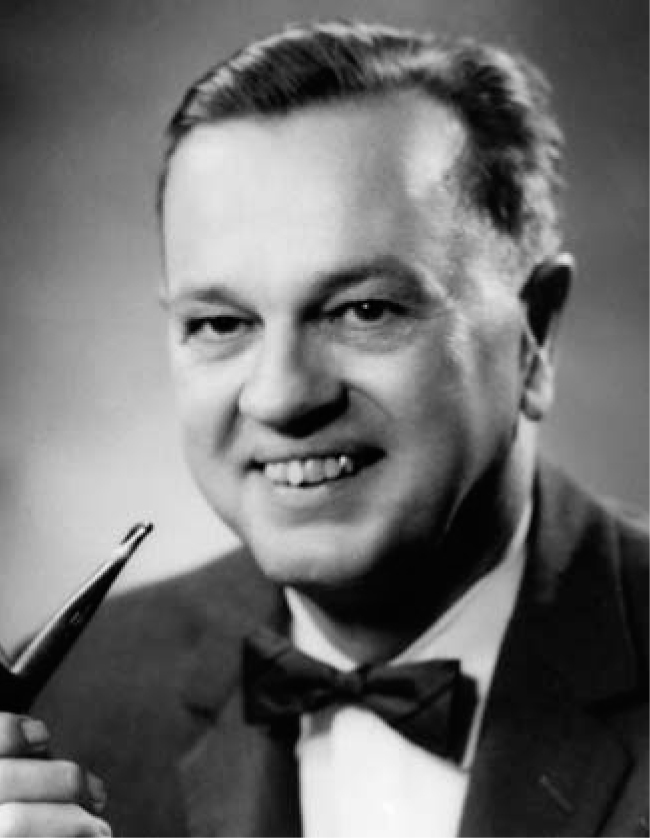
Francis Dudley Williams
DOI: 10.1063/1.2117840
Francis Dudley Williams, a former president of the Optical Society of America (OSA) who was well known for his research in IR spectroscopy, died on 2 December 2004 at a hospice in Las Cruces, New Mexico.
Dudley was born on 12 April 1912 in Covington, Georgia. In 1929 he entered Oxford College of Emory University. Family circumstances, though, resulted in Dudley’s being what he described as an “academic vagrant.” He eventually completed his undergraduate studies at the University of North Carolina at Chapel Hill, although he maintained a warm affection for Emory. He pursued graduate studies at several institutions, but settled on UNC, where he received his MA in 1934 and his PhD in physics in 1936 for a thesis on IR spectroscopy. That area of research became his lifelong passion.
Fresh from graduate studies, Dudley was appointed to the physics faculty at the University of Florida in Gainesville; he taught there until 1941. He participated in radar development at MIT’s radiation laboratory for the next two years and subsequently joined Los Alamos Scientific Laboratory to work on the atomic bomb. He used the galvanometers he had designed to measure the thermal radiation produced during the Trinity test in July 1945.
In 1946, Dudley joined the physics faculty of Ohio State University, where he gained an international reputation in IR physics. During his time at OSU, he and George Shortley, who was a professor of physics there at the time, wrote an engineering-physics textbook that remained in print for 30 years. In 1963, he moved to North Carolina State University to head the physics department. That situation was short-lived, however, because a year later he accepted a position as Regents Distinguished Professor of Physics at Kansas State University in Manhattan, where he remained until his retirement in 1982.
At Kansas State, Dudley continued to pursue research in the IR spectroscopy of gases, liquids, and solids, and conducted investigations of both transmission and reflection spectra. He also was committed to teaching and had an impressive ability to encourage his graduate students to produce their finest work. He regularly presented lectures in engineering physics and loved to do lecture demonstrations. After one demonstration had gone awry, he completed the lecture with a towel wrapped around his bleeding hand before seeking first aid.
In 1980, Dudley and I undertook to write an engineering-physics text that was envisioned as a successor to the book he had written earlier with Shortley. As I look back, I am amazed at the patience he showed as I struggled for words; he could write the draft of a chapter in a weekend. The book, Physics for Science and Engineering, was eventually published in 1981 (Van Nostrand), but it appeared in the same month as the publisher’s demise through a corporate buyout, and it died young. However, in the experience I learned a tremendous amount from Dudley—about physics, teaching, and writing.
A valuable member of the physics community, Dudley was president of OSA in 1979 and was a fellow at universities and institutions in Belgium, the Netherlands, and the UK. He was honored in 2000, when he received Emory University’s highest award for alumni, its Emory Medal.
Dudley was a scholar who was un-failingly courteous, kind, and polite. I saw him excited, but never outwardly angry. He was a generous and often anonymous supporter of cultural and literary activities. He brought stature, experience, and good sense to Kansas State at a time of growth when those attributes were important for the physics department and the university.

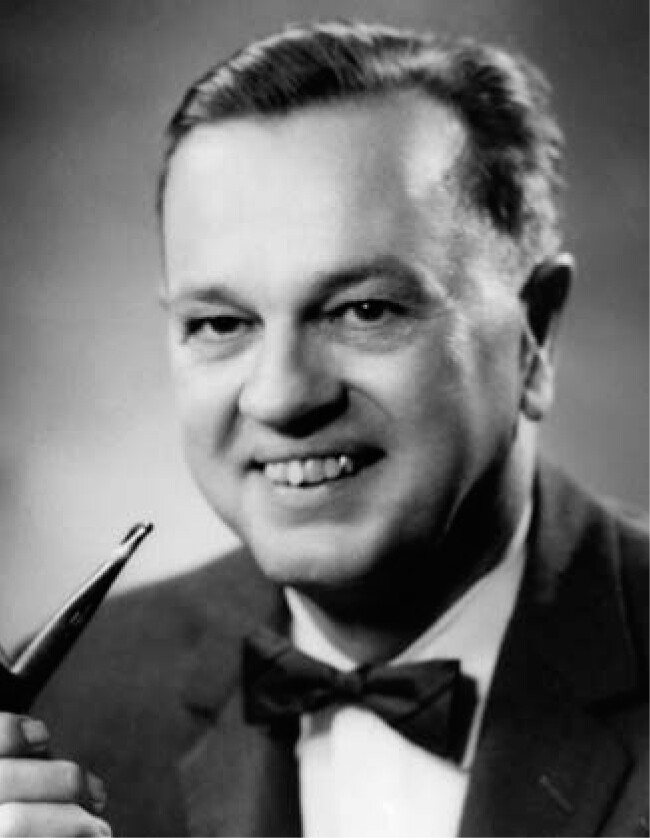
Francis Dudley Williams
AIP EMILIO SERGE VISUAL ARCHIVE, PT COLLECTION
More about the authors
John D. Spangler, Kansas State University, Manhattan, US .