Physicists Get First Take at Science Fiction Film
DOI: 10.1063/1.2408603

It is not uncommon for an unknown director to win an award at the Sundance Film Festival. But it is uncommon for a prize to go to a complex, low-budget science fiction thriller. And Primer, which was named this year’s dramatic award winner, may be the first film to be marketed through physics conferences.
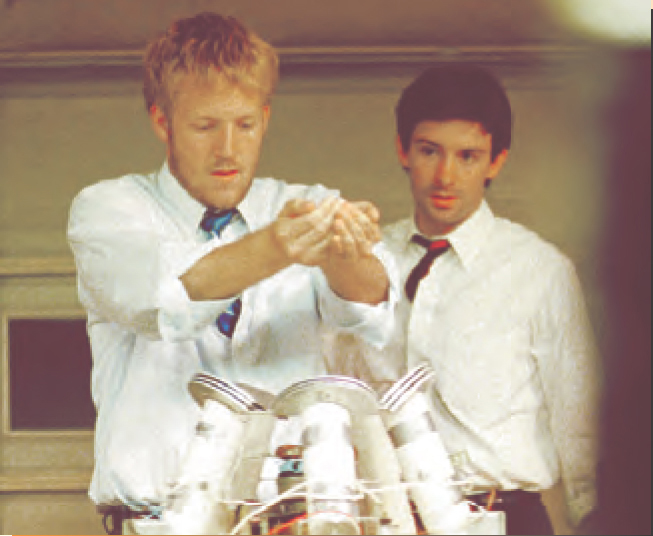
Primer is about two young engineers conducting experiments on themselves with a time machine they build, and the unexpected personal consequences. The film was written and directed by Shane Carruth, a 27-year-old former mathematician and engineer, who also stars in the movie. Carruth wrote the screenplay, he says, because he “wanted to see a story play out that was more in line with the way real innovation takes place than I had seen on film before.”
Participants at semiconductor conferences at the University of California, Santa Barbara, and Northern Arizona University had an opportunity to watch Primer this summer. The film’s distributors say marketing to physicists is a cost-effective way of testing the movie with an international and technically savvy audience. “Nearly 300 physicists saw the movie [in Santa Barbara] and stayed late into the night discussing it,” says UCSB physicist David Awschalom. The screening was organized by the university’s Professional Artists Lab, a forum within which artists develop new works for theater, film, and television. Screenings at other physics meetings are scheduled for later this year.
“In general,” says Carruth, “the response from scientists has been encouraging, although I’ve already had one complaint about using the term ‘pulling voltage’ instead of ‘drawing current.’” Primer will be released in selected markets later this month.

Shane Carruth (right) with actor David Sullivan.
SHANE CARRUTH

More about the authors
Paul Guinnessy, pguinnes@aip.org