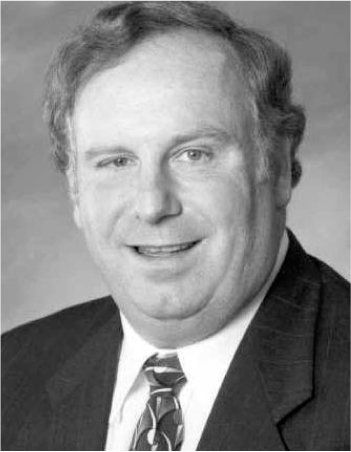
Morris Is OSA Vice President
DOI: 10.1063/1.2405611
On 1 January, Michael Morris took office as vice president of the Optical Society of America. Morris, the CEO of Corning Rochester Photonics in upstate New York, succeeded Anthony M. Johnson, a professor of physics at the New Jersey Institute of Technology in Newark, and will become OSA’s president-elect in 2002 and president in 2003.
Electronic publishing is the way forward for OSA, says Morris. “With declining journal subscriptions, we must aggressively explore new initiatives, technologies, and modalities for information exchange while maintaining the highest professional standards.” Morris also plans to continue OSA’s active role in international collaborations and education.
Morris received a BS in engineering physics from the University of Oklahoma in 1975, then earned MS and PhD degrees in electrical engineering from Caltech. Before his move to Corning Rochester Photonics, a subsidiary of Corning Inc that he cofounded in 1989, Morris was a professor at the University of Rochester’s Institute of Optics. His research interests cover a variety of topics in statistical optics, optical information processing, and automatic pattern recognition.
Three new directors of OSA also took office in January, for two-year terms. They were Rod C. Alferness, the chief technical officer of the optical networking group at Lucent Technologies; Keren Bergman, an assistant professor of electrical engineering at Princeton University; and James G. Fujimoto, a professor of optics at MIT.