Imaging frontiers surveyed at industrial physics forum
DOI: 10.1063/1.3047667
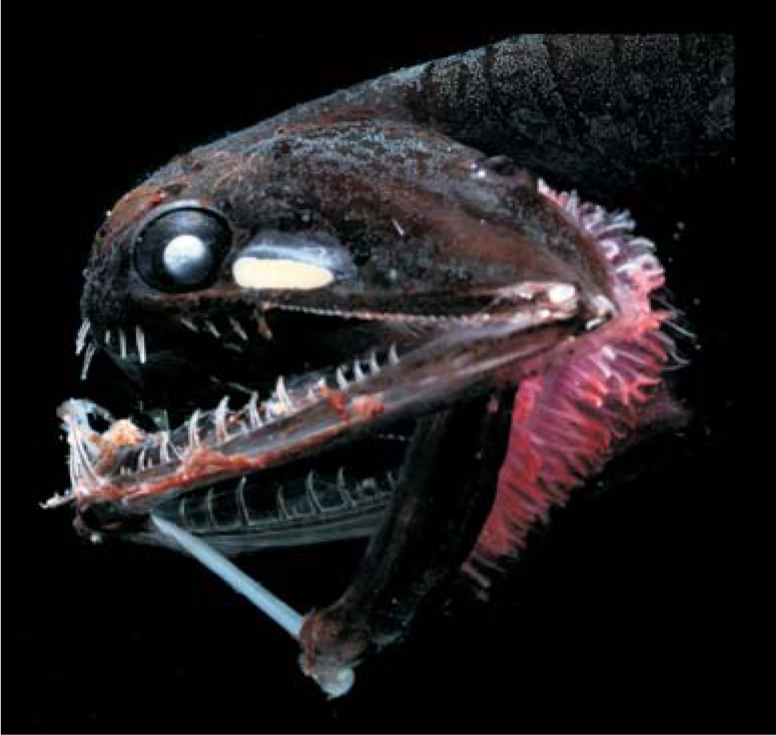
The glow from some deep-sea creatures, like this rat-trap fish, may prove a nuisance to astrophysicists seeking high-energy neutrinos in the dark ocean waters. The bioluminescent headlights next to each fish eye are probably used to locate prey or signal to a prospective mate, says Edith Widder of the Ocean Research and Conservation Association, but such illumination may also mask the Cherenkov radiation that underwater telescopes rely on to detect neutrinos.
Widder discussed the research challenges of imaging and quantifying bioluminescence in the marine imaging session of the 50th annual Industrial Physics Forum, which was held this October in Boston. The forum, which spotlighted issues in scientific imaging, was organized by the industrial outreach program of the American Institute of Physics. Among the topics were recent innovations in adaptive optics for extremely large telescopes and advanced microscopy for biological imaging. Several speakers noted that fluorescence microscopy was accelerated by the discovery of green fluorescent protein in jellyfish some 45 years ago, for which this year’s chemistry Nobel Prize recipients are being honored (see the story on

Edith Widder