ITER and the prospects for commercial fusion
DOI: 10.1063/PT.3.4510
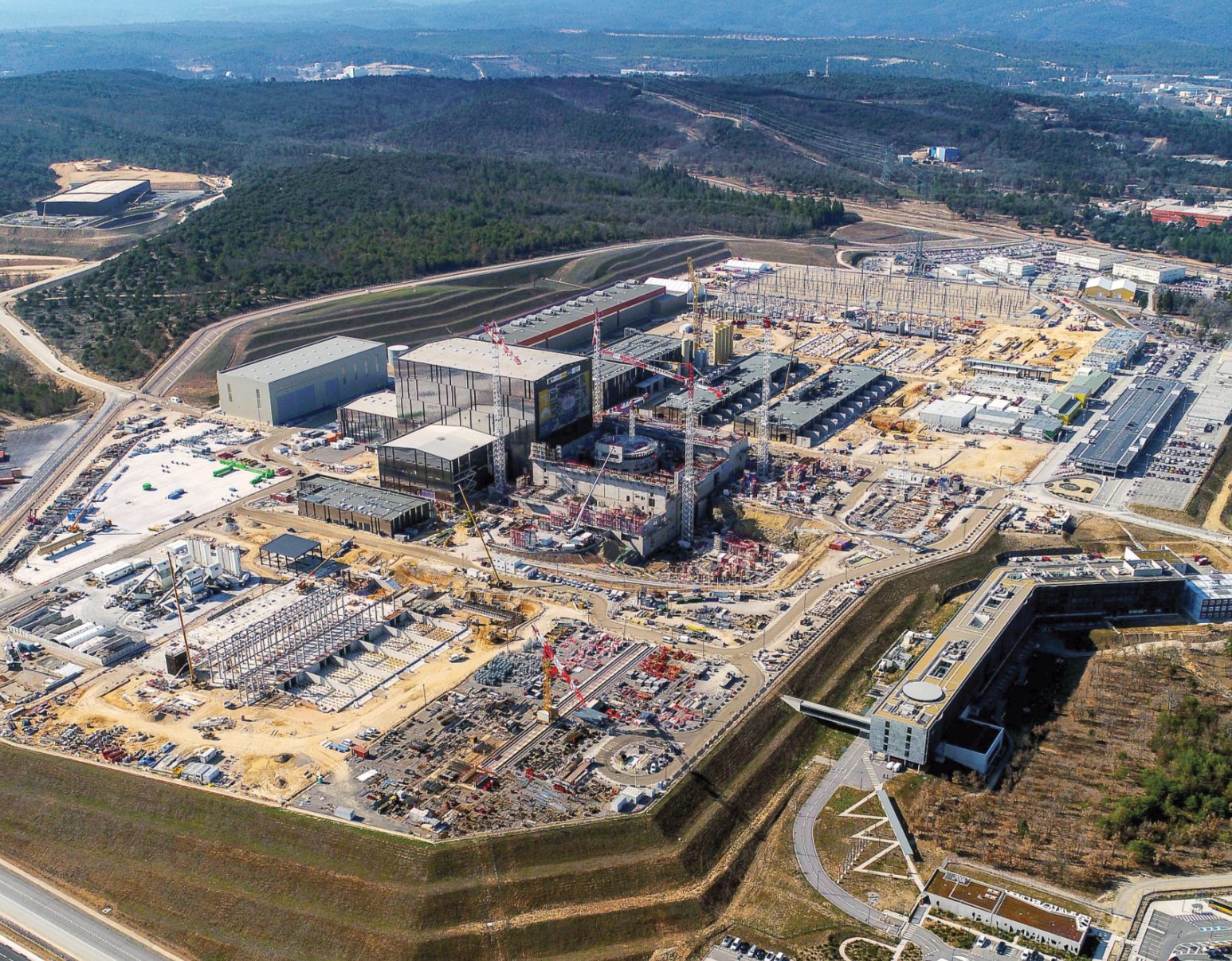
The article “The challenge and promise of studying burning plasmas ” by Richard Hawryluk and Hartmut Zohm (Physics Today, December 2019, page 34) contains a nice description of the physics involved in a burning plasma, which ITER, the international prototype fusion energy reactor, hopefully will produce. But ITER has had a troubled history. It was approved in 2005 for an estimated construction cost of approximately $5 billion, and deuterium–tritium experiments were expected to start in 2027. At present, the estimated cost has mushroomed to at least $25 billion in today’s dollars, and the start date for D–T experiments has slipped to 2035, with their completion expected around 2040.
Realistically, though, ITER’s development path is unlikely to produce commercially competitive electricity in this century. According to the ITER website (www.iter.org ), the reactor is designed to produce a 10-fold or better return on energy; that is, it should produce 500 MW of fusion power from its 50 MW of input heating power.
Let’s assume that ITER achieves that return in about 2040. What would that mean for power production? Electricity is generally produced with an efficiency of around one-third, so as a power plant, ITER would generate approximately 170 MW of electricity (MWe). Yet it requires 50 MW of beams or microwaves to power it. But beams and microwaves are themselves produced at around one-third efficiency, meaning that they would require 150 MW of input power. That would leave virtually nothing for the power grid. A typical commercial power plant, by comparison, will generate about 3 GW of heat or 1 GW of electricity.
For an ITER-like tokamak to be economically integrated into the grid, it would need its gain increased by at least a factor of three or four, its power increased by about a factor of six (to be on par with a typical commercial power plant), and both its size and cost reduced. Such a tokamak would deliver at least an order of magnitude more power to the wall and diverter plates. These requirements are not minor details! In all likelihood, reaching them would take decades and tens of billions of dollars, assuming they could be accomplished at all.

© ITER ORGANIZATION

In addition to these obvious difficulties, tokamaks are limited in pressure and density, as Hawryluk and Zohm point out. They are also limited in current. The limits are not controversial; they have been well established theoretically and confirmed experimentally. Yet the constraints they place on fusion power, which I have called “conservative design rules,” 1 , 2 have been ignored by the tokamak community. Furthermore, conservative design rules have been in the literature for a decade. I have given many presentations on them at fusion labs and other places, and they have never been challenged, in print or in my seminars.
As long as tokamaks remain so constrained, they are unlikely to generate economic power. However, there is an alternative. As a breeder of nuclear fuel, an ITER-like tokamak would work well. Most likely it could economically breed uranium-233 from thorium. It would be a much more prolific fuel producer than a fission breeder of equal power and could become the basis of a worldwide, sustainable, carbon-free, nuclear infrastructure. Furthermore, it might well be able to do so soon after midcentury, assuming ITER is successful. 1 , 2
References
1. W. Manheimer, J. Fusion Energy 33, 199 (2014). https://doi.org/10.1007/s10894-014-9690-9
2. W. Manheimer, IEEE Access 6, 64954 (2018). https://doi.org/10.1109/ACCESS.2018.2877672
More about the authors
Wallace Manheimer, (wallymanheimer@yahoo.com) Allendale, New Jersey.