Gender matters: Cures for bias
DOI: 10.1063/PT.3.3982
Women in physics departments are an underrepresented population group and will likely continue to experience bias until they are seen as valuable assets rather than as a diversity issue needing to be rectified. 1 Jennifer Blue, Adrienne Traxler, and Ximena Cid, the authors of “Gender matters” (Physics Today, March 2018, page 40 ), articulately identify and document biases against women in university physics departments. They suggest two solutions: Change the way women are welcomed into physics departments, and customize pedagogy to enable female physics students to succeed in physics careers. Although those solutions have been suggested for decades, 2 , 3 the biases persist.

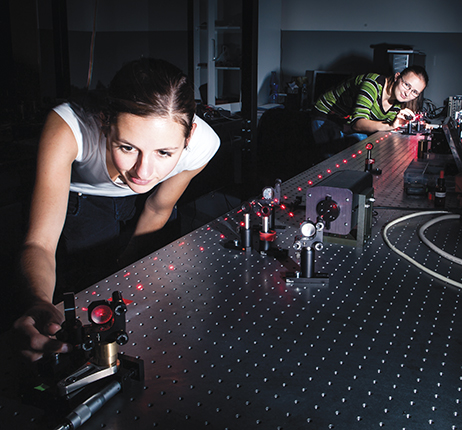
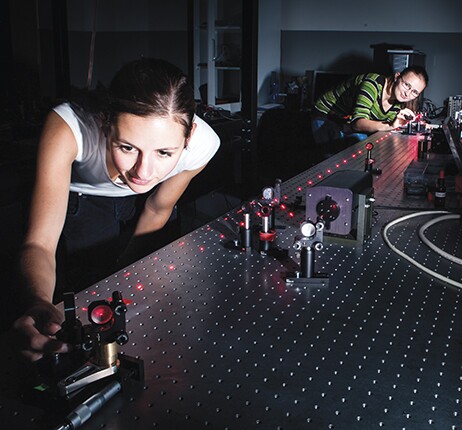
© LIGHTPOET/123rf.com
There may be another solution if biases exist because people have minimal positive experience with women as employees, researchers, and leaders and thus are stereotyping them rather than deliberately deciding against them. Ga-eun Seo and coauthors provide action steps women in physics can take to help replace those stereotypical beliefs. 4
The focus of initiatives should be on realizing the benefits of diversity. Women can enrich a science team by bringing unique points of view, new ways of interpreting data, and creative ideas for approaching and solving problems. 5 Increasing the presence of women scientists in physics departments could catapult physics beyond the current horizons and into a realm not yet imagined. I have been a high school physics teacher for the past 18 years, and I know that as female students transition to university physics departments, they need women there who can serve as role models.
Rather than establish new department rules and new pedagogical methods, the bias cure may be to recognize the intrinsic value women can bring to physics departments and work with greater intensity to enroll them.
References
1. B. M. Ferdman, B. R. Deane, eds., Diversity at Work: The Practice of Inclusion, Jossey-Bass/Wiley (2014), p. 5.
2. “Physics departments explore innovative curriculum approaches,” APS News, August/September 1997, p. 2.
3. New England Consortium for Undergraduate Science Education, Achieving Gender Equity in Science Classrooms, Office of the Dean of the College, Brown University (June 1996).
4. G. Seo, A. H. Mehdiabadi, W. Huang, J. Furth. High. Educ. 41, 741 (2017). https://doi.org/10.1080/0309877X.2016.1177167
5. S. Ritchie et al., https://www.biorxiv.org/content/early/2018/01/22/123729 .
More about the authors
Jacqueline G. Kane, (jkane@toledosua.org) St Ursula Academy, Toledo, Ohio.